Many travelers search for a “visa on arrival” when planning a trip to the Philippines. Here is what you actually need to know: the Philippines does not offer a general tourist visa on arrival. Instead, nationals from over 150 countries can enter visa-free for up to 30 days under Executive Order No. 408. A separate Visa Upon Arrival (VUA) program exists, but it is limited to specific non-tourist categories like business investors and conference delegates.
This guide breaks down exactly who can enter the Philippines without a visa, what the VUA program covers, country-specific stay limits, and the documents you need at the border.
Visa-Free Entry vs. Visa on Arrival: What Is the Difference?
The terms “visa on arrival” and “visa-free entry” sound similar, but in the Philippines they mean very different things:
- Visa-free entry means you do not need a visa at all. You arrive, present your passport and documents, and immigration grants you entry. This applies to nationals of 157 countries.
- Visa on arrival (VUA) is a formal visa issued at the port of entry by the Bureau of Immigration. It is not available to ordinary tourists. It is reserved for specific categories of travelers such as foreign investors, athletes, and delegates to international conferences.
If you are a tourist from a visa-free country, you do not need to apply for anything at the airport. You just need to complete the free eTravel registration online before you fly.
Visa-Free Countries: Who Can Enter Without a Visa?
Nationals of the following 157 countries can enter the Philippines without a visa for an initial stay of 30 days, provided they hold a passport valid for at least six months beyond their arrival date and have a confirmed return or onward ticket.
Countries With Extended Stay Limits
Two countries enjoy a longer visa-free stay under bilateral agreements:
| Country | Stay Limit | Notes |
|---|---|---|
| Brazil | 59 days | Based on existing bilateral agreement |
| Israel | 59 days | Based on existing bilateral agreement |
Special Arrangements for Hong Kong and Macau
| Passport Type | Stay Limit | Conditions |
|---|---|---|
| Hong Kong SAR passport | 14 days | Must have return/onward ticket |
| Macau SAR passport | 14 days | Must have return/onward ticket |
| Hong Kong British National Overseas (BNO) | 7 days | Must have return/onward ticket |
| Macau-Portuguese passport | 7 days | Must have return/onward ticket |
Special Arrangements for Indian Nationals
India does not appear on the standard visa-free country list, but Indian nationals enjoy special visa-free privileges since June 2025:
| Situation | Stay Limit | Requirements |
|---|---|---|
| Indian national (standard) | 14 days (non-extendible) | Valid passport (6+ months), confirmed hotel booking, proof of financial capacity, return/onward ticket, no BI derogatory record |
| Indian national with valid US, Japan, Australia, Canada, Schengen, Singapore, or UK visa/permit | 30 days (non-extendible) | Valid passport (6+ months), return/onward ticket, no BI derogatory record |
Special Arrangements for Chinese Nationals
Mainland Chinese nationals holding a valid unexpired visa or permanent residence from Australia, Canada, Japan, Schengen countries, or the United States may enter the Philippines visa-free for 7 days with a return or onward ticket.
Complete List of 30-Day Visa-Free Countries
Nationals from the following 157 countries receive a standard 30-day visa-free entry:
A-B: Andorra, Angola, Antigua and Barbuda, Argentina, Australia, Austria, Bahamas, Bahrain, Barbados, Belgium, Belize, Benin, Bhutan, Bolivia, Botswana, Brunei, Bulgaria, Burkina Faso, Burundi
C: Cambodia, Cameroon, Canada, Cape Verde, Central African Republic, Chad, Chile, Colombia, Comoros, Congo, Congo (DR), Costa Rica, Cote d’Ivoire, Croatia, Cyprus, Czech Republic
D-F: Denmark, Djibouti, Dominica, Dominican Republic, Ecuador, El Salvador, Equatorial Guinea, Eritrea, Estonia, Ethiopia, Fiji, Finland, France
G-H: Gabon, Gambia, Germany, Ghana, Greece, Grenada, Guatemala, Guinea, Guinea-Bissau, Guyana, Haiti, Honduras, Hungary
I-K: Iceland, Indonesia, Ireland, Italy, Jamaica, Japan, Kazakhstan, Kenya, Kiribati, Korea (South), Kuwait, Kyrgyzstan
L-M: Laos, Latvia, Lesotho, Liberia, Liechtenstein, Lithuania, Luxembourg, Madagascar, Malawi, Malaysia, Maldives, Mali, Malta, Marshall Islands, Mauritania, Mauritius, Mexico, Micronesia, Monaco, Mongolia, Morocco, Mozambique, Myanmar
N-P: Namibia, Nepal, Netherlands, New Zealand, Nicaragua, Niger, Norway, Oman, Palau, Panama, Papua New Guinea, Paraguay, Peru, Poland, Portugal
Q-R: Qatar, Romania, Russia, Rwanda
S: Samoa, San Marino, Sao Tome and Principe, Saudi Arabia, Senegal, Seychelles, Singapore, Slovak Republic, Slovenia, Solomon Islands, South Africa, Spain, St. Kitts and Nevis, St. Lucia, St. Vincent and the Grenadines, Suriname, Swaziland (Eswatini), Sweden, Switzerland
T-Z: Tajikistan, Tanzania, Thailand, Togo, Trinidad and Tobago, Tunisia, Turkey, Turkmenistan, Tuvalu, Uganda, United Arab Emirates, United Kingdom, United States, Uruguay, Uzbekistan, Vanuatu, Vatican, Venezuela, Vietnam, Zambia, Zimbabwe
Visa Upon Arrival (VUA): The Special Program
The Visa Upon Arrival (VUA) is a formal program managed by the Bureau of Immigration under Memorandum Order No. MCL-07-015. Unlike visa-free entry, the VUA is not for ordinary tourists. It is designed for specific categories of travelers:
Who Qualifies for VUA?
- Foreign investors and businessmen endorsed by the Board of Investments (BOI), Philippine Retirement Authority (PRA), Philippine Chamber of Commerce and Industry (PCCI), local business councils, or foreign chambers of commerce
- Athletes and delegates to sports competitions, conventions, or exhibitions, endorsed by organizers or sponsors
- Delegates, participants, and resource speakers at international conventions, symposia, conferences, and similar gatherings, endorsed by organizers or sponsors
- Foreign investors and executives in investments endorsed by the government, or resulting from bilateral agreements or Presidential invitations
- Officials of international organizations including the World Bank, Asian Development Bank, and other international development partners, including dependent spouse and unmarried minor children
- Other foreign nationals at the discretion of the Bureau of Immigration Commissioner
VUA Fees
| Category | Fee | Notes |
|---|---|---|
| VUA Single Entry (30 days) | USD 25 | For qualifying business/investor/delegate travelers |
| VUA Extension (additional 29 days) | USD 50 | Plus PHP 500 express fee |
| VUA Multiple Entry (multinational corporations) | PHP 5,010 | Initial 3-month period, extendable 6 months at a time |
| Indian/Chinese group tours (3-19 persons) | USD 25 per person | Per RADJR Memorandum 2012-002 |
| Indian/Chinese group tours (20+ persons) | USD 15 per person | Per RADJR Memorandum 2012-002 |
| Legal Research Fee | PHP 10 | Added to each immigration fee |
Note: Fees are subject to change. Verify current rates with the Bureau of Immigration before travel.
How to Apply for VUA
- Obtain the checklist of requirements from the Bureau of Immigration
- Secure the Order of Payment Slip
- Pay the required immigration fees at the counter
- Get the Official Receipt
- Submit all requirements along with the Official Receipts
- Claim the visa and approved Order
Documents You Need at the Philippine Border
Regardless of whether you enter visa-free or through the VUA program, you need these documents when arriving in the Philippines:
For Visa-Free Entry
- Valid passport – must be valid for at least six (6) months beyond your arrival date
- Return or onward ticket – proof of confirmed travel out of the Philippines within your allowed stay period (30 days for most nationalities)
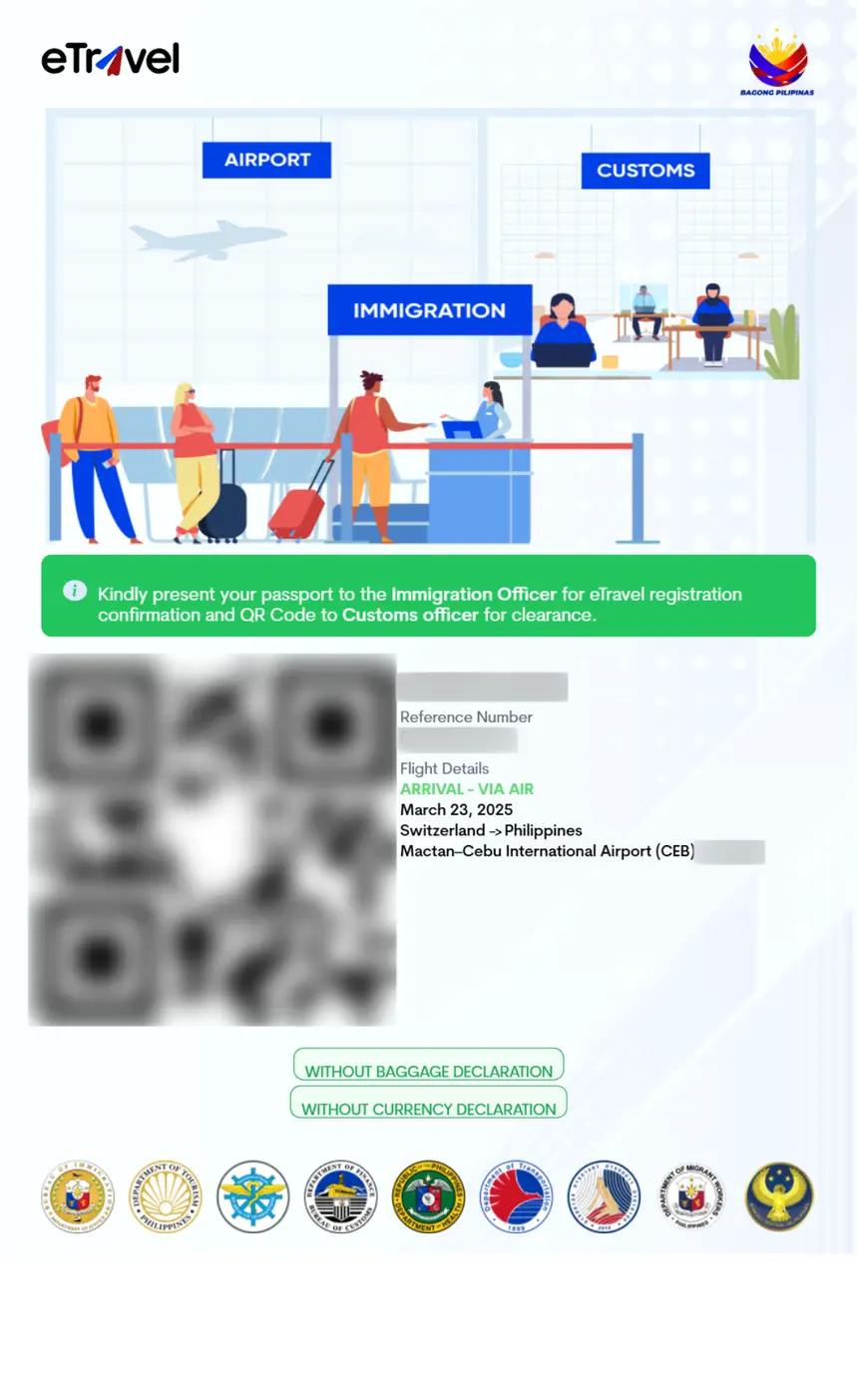
- eTravel QR code – completed registration at etravel.gov.ph at least 72 hours before arrival (free of charge)
- Proof of accommodation – hotel booking or invitation letter (recommended but not always checked)
- Proof of financial capacity – bank statement or cash (recommended for longer stays)
For VUA Holders
All of the above, plus:
– Endorsement letter from the relevant organization (BOI, PCCI, conference organizer, etc.)
– VUA application form (available at the immigration counter)
– VUA fee payment in cash (exact amount preferred)
How to Extend Your Stay in the Philippines
If you want to stay longer than your initial visa-free period, you can extend at any Bureau of Immigration (BI) office in the Philippines:
| Extension | Duration | Approximate Cost |
|---|---|---|
| First extension | 29 additional days (total 59 days) | PHP 3,030 |
| Second extension | 30 additional days (total 89 days) | PHP 3,030 |
| Further extensions | 30 days each | Varies |
| Maximum stay without a visa | 36 months | Requires multiple extensions |
You do not need to leave the Philippines to extend. Visit any BI district office, bring your passport, pay the fee, and get your extension stamp. Processing usually takes the same day.
The Balikbayan Privilege
Former Filipino citizens who are now naturalized citizens of a visa-free country can stay in the Philippines visa-free for up to one year under the Balikbayan privilege (Republic Act No. 9174). Their foreign spouse and children can also enjoy this privilege if they enter together and present proof of relationship. Requirements:
- For former Filipinos: Philippine birth certificate or old Philippine passport
- For dual citizens: Dual Citizenship Identification Certificate
- For foreign spouse: Marriage certificate
- For children: Birth certificate proving relationship
Countries That DO Need a Visa Before Traveling
If your country is not on the visa-free list above, you must apply for a visa at a Philippine Embassy or Consulate before traveling. You may also apply through the official e-Visa portal at evisa.gov.ph if your nationality is eligible. Countries that typically require a visa include:
- Afghanistan
- Bangladesh
- China (mainland, unless holding qualifying third-country visa)
- Cuba
- Egypt
- India (unless meeting the 14-day or 30-day conditional visa-free requirements)
- Iran
- Iraq
- Jordan
- Lebanon
- Libya
- Nigeria
- North Korea
- Pakistan
- Palestine
- Sierra Leone
- Somalia
- South Sudan
- Sri Lanka
- Sudan
- Syria
- Taiwan (special MECO ETA arrangement available)
- Yemen
Note: This list may change. Always check the latest visa policy with the nearest Philippine Embassy or at immigration.gov.ph.
Frequently Asked Questions
Can I get a visa on arrival in the Philippines as a tourist?
No. The Philippines does not offer a general tourist visa on arrival. If you are from one of the 157 visa-free countries, you do not need a visa at all for stays up to 30 days. If your country is not on the visa-free list, you must obtain a visa before traveling.
Do US citizens need a visa for the Philippines?
No. US citizens can enter the Philippines visa-free for up to 30 days. You need a valid passport (6+ months validity) and a return or onward ticket. You can extend your stay at any Bureau of Immigration office in the Philippines.
How long can a UK citizen stay in the Philippines without a visa?
UK citizens can stay visa-free for up to 30 days. Extensions are available at Bureau of Immigration offices if you wish to stay longer.
Can Indian citizens get visa-free entry to the Philippines?
Yes, under special arrangements effective since June 2025. Indian nationals can enter visa-free for 14 days (non-extendible). Those holding a valid US, UK, Japan, Australia, Canada, Schengen, or Singapore visa can stay for 30 days.
Is the eTravel registration the same as a visa?
No. eTravel is a free online health and travel declaration system. It is required for all travelers entering the Philippines, regardless of visa status. It is not a visa and does not replace one. Register at etravel.gov.ph at least 72 hours before your flight.
Can I convert my visa-free stay to a work visa while in the Philippines?
No. Visa-free entry cannot be converted to a work visa or other immigration status while in the Philippines. You must leave the country and apply for the appropriate visa from a Philippine Embassy or Consulate abroad.
What happens if I overstay my visa-free period?
Overstaying results in fines, potential detention, and possible deportation. The Bureau of Immigration charges penalties for each day of overstay. In serious cases, you may be blacklisted from re-entering the Philippines. Always extend your stay before your authorized period expires.
Do I need a return ticket to enter the Philippines?
Yes. Immigration officers may ask to see proof of a confirmed return or onward ticket within your authorized stay period. Without one, you may be denied entry.
Is the Philippines visa on arrival free?
There is no tourist visa on arrival. Visa-free entry is free. The Visa Upon Arrival (VUA) program for business travelers, investors, and delegates costs USD 25 for a single entry.
Can I stay in the Philippines for 3 months without a visa?
If you are from a visa-free country, you get 30 days initially. You can extend at a Bureau of Immigration office for an additional 29 days (first extension), then 30 days at a time. Three months (approximately 90 days) requires two to three extensions, but it is possible without leaving the country.