
US citizens enjoy a generous visa-free arrangement when visiting the Philippines. Whether you are planning a short vacation, a long-term stay, or considering work or retirement, this guide covers every visa option, requirement, and practical detail you need to know before traveling.
Quick Overview
US passport holders do not need a visa for tourism stays of up to 30 days in the Philippines. This visa-free privilege is granted under Executive Order No. 408 and administered by the Bureau of Immigration (BI) and the Department of Foreign Affairs (DFA).
| Detail | Requirement |
|---|---|
| Visa-free stay | 30 days |
| Passport validity | At least 6 months beyond planned stay |
| Return ticket | Required (onward travel proof) |
| eTravel registration | Required before arrival |
| Maximum stay with extensions | Up to 36 months |
Entry Requirements for US Citizens
What You Need at Immigration
When arriving in the Philippines, US citizens must present the following documents to the immigration officer:
- Valid US passport – must be valid for at least six (6) months beyond your intended period of stay
- Return or onward airline ticket – proof that you plan to leave the Philippines within your authorized stay
- eTravel registration – completed online before departure at etravel.gov.ph
- Completed arrival card – provided by the airline or at the airport
You do not need to show proof of accommodation, financial means, or travel insurance at the border, though having these is always advisable.
The eTravel System
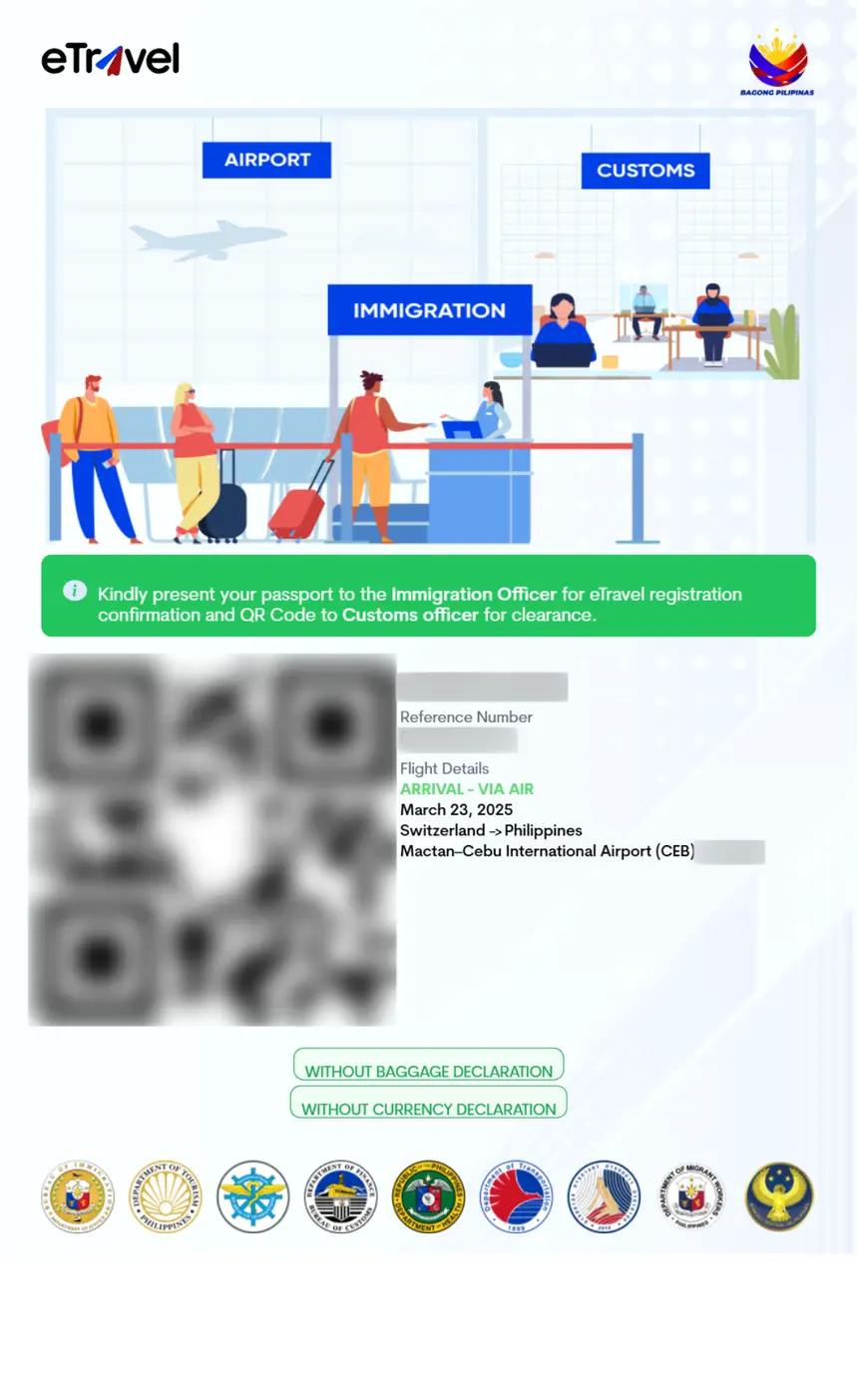
Since 2023, all arriving passengers must register through the Philippine eTravel system. This digital registration replaces the old paper-based health declaration and arrival cards. You should complete your eTravel registration within 72 hours before your flight.
To register:
- Visit etravel.gov.ph
- Create an account with your email address
- Fill in personal details, passport information, and flight details
- Upload a photo of your passport data page
- Receive your eTravel QR code via email
- Present the QR code to immigration upon arrival
Extending Your Stay Beyond 30 Days
If you want to stay longer than 30 days, the Bureau of Immigration offers straightforward visa extensions. US citizens can extend their stay in increments, with the total maximum stay reaching 36 months (3 years) for visa-free nationals.
First Extension: Days 31 to 59
Your first extension adds 29 days to your initial 30-day stay, giving you a total of 59 days in the Philippines.
Fees for the first extension (approximate):
| Fee | Amount (PHP) |
|---|---|
| Visa Waiver | 500 |
| Visa Waiver Application Fee | 1,000 |
| Certification Fee | 500 |
| Legal Research Fee (LRF) | 30 |
| Express Fee | 1,000 |
| **Total** | **PHP 3,030 (~USD 54)** |
Further Extensions
After your first extension, you can continue extending in one-month or two-month increments. Each subsequent extension requires visiting a Bureau of Immigration office and paying updated fees.
Typical costs for additional extensions (adult, 16+):
| Fee | 1 Month (PHP) | 2 Months (PHP) |
|---|---|---|
| Extension fee | 500 | 1,000 |
| Application fee | 300 | 600 |
| ACR I-Card (Alien Certificate of Registration) | 1,000 | 1,000 |
| Head Tax | 250 | 250 |
| Certification Fee | 500 | 500 |
| Express Fee | 1,000 | 1,500 |
| ECC Fee | 700 | 700 |
| LRF | 50 | 50 |
| Visa Sticker | 100 | 100 |
| **Total** | **PHP 4,400 (~USD 79)** | **PHP 5,700 (~USD 102)** |
The ACR I-Card costs an additional USD 50 and is required after 59 days of stay. An express processing fee of PHP 500 also applies for I-Card issuance.
Where to Extend
You can process extensions at:
- Bureau of Immigration Main Office – Magallanes Drive, Intramuros, Manila
- BI satellite and field offices across the Philippines – available in major cities like Cebu, Davao, Clark, and Subic
- Online tourist visa extension – available through the BI eServices portal at e-services.immigration.gov.ph
Overstaying Penalties
If you overstay your authorized period, the Bureau of Immigration imposes a fine of PHP 500 per month of overstay, plus additional administrative fees. Overstaying can also result in deportation proceedings and being placed on the BI blacklist, which would prevent future entry.
Other Visa Types for US Citizens
Beyond the visa-free tourist entry, US citizens can apply for several other Philippine visa categories depending on the purpose of their visit.
9(a) Temporary Visitor Visa
This is the standard tourist or business visa. While US citizens do not need this for stays under 30 days, it may be required if you have been previously denied entry or have immigration violations. It also covers medical visits.
9(d) Treaty Trader or Investor Visa
Available to US citizens engaged in substantial trade between the US and the Philippines, or who have made significant investments in the country. Requires documentation of trade activities or investment amounts.
9(f) Student Visa
US citizens who wish to study in the Philippines for more than 59 days must apply for a 9(f) student visa. You need an acceptance letter from a school accredited by the Bureau of Immigration and must meet financial requirements.
9(g) Pre-Arranged Employment Visa
If you have a job offer from a Philippine employer, you will need a 9(g) working visa. The employer typically sponsors this visa and handles most of the application process through the BI.
13(a) Immigrant Visa by Marriage
US citizens married to Filipino nationals can apply for a 13(a) immigrant visa, which grants permanent residency. This requires a valid marriage certificate, proof of the spouse’s Filipino citizenship, and financial capacity documentation.
SRRV – Special Resident Retiree’s Visa
The Philippines Retirement Authority (PRA) offers the SRRV to US citizens aged 35 and older. This is one of the most popular long-term visa options:
| SRRV Type | Minimum Deposit | Age Requirement |
|---|---|---|
| SRRV Classic | USD 10,000 (with pension) or USD 50,000 (without) | 50+ |
| SRRV Smile | USD 20,000 | 35+ |
| SRRV Human Touch | USD 1,500 (with pension of USD 1,500/month) | 50+ (with medical needs) |
SRRV holders can live in the Philippines indefinitely and enjoy multiple-entry privileges.
Balikbayan Privilege
If you are a former Filipino citizen who has naturalized as a US citizen, you may be eligible for the Balikbayan privilege. This grants a one-year visa-free stay in the Philippines when you travel with a Filipino spouse or child, or when returning as a former Filipino citizen under Republic Act No. 9225.
To qualify, you must present:
- Your valid US passport
- Proof of former Philippine citizenship (old Philippine passport, birth certificate, or naturalization certificate)
The eTravel Pass: What It Is and Why You Need It
The eTravel Pass (not to be confused with a visa) is a mandatory digital travel registration required for all travelers entering and departing the Philippines. It serves as your health declaration, customs declaration, and arrival/departure card in a single digital form.
Key points about the eTravel Pass:
- It is free of charge
- Registration must be completed before your flight
- Each traveler, including children, needs their own registration
- The QR code generated is valid for a single trip
- You must register for both arrival and departure
Frequently Asked Questions
Do US citizens need a visa for the Philippines?
No. US citizens can enter the Philippines without a visa for stays of up to 30 days for tourism or business purposes. You only need a valid passport (6+ months validity) and a return ticket.
How long can a US citizen stay in the Philippines?
Without extensions, 30 days. With extensions, you can stay up to 36 months by regularly extending at the Bureau of Immigration. Each extension costs between PHP 2,430 and PHP 5,700 depending on duration.
Can I work in the Philippines on a tourist visa?
No. Working in the Philippines on a tourist visa or visa-free entry is illegal. You must obtain a 9(g) pre-arranged employment visa or a special work permit before engaging in any paid employment.
What happens if I overstay?
Overstaying incurs a fine of PHP 500 per month plus additional fees. For extended overstays, you may face deportation and a re-entry ban. Always extend your visa before it expires.
Is the eTravel Pass the same as a visa?
No. The eTravel Pass is a mandatory digital registration system for all arriving and departing passengers. It is not a visa and does not authorize entry – it is a pre-travel health and customs declaration.
Can I apply for a Philippine visa online?
US citizens do not need to apply for a visa online for short tourist stays. For other visa types (student, work, immigrant), applications must be submitted through the Philippine Bureau of Immigration or at a Philippine embassy or consulate.
Do I need travel insurance?
While not legally required for entry, comprehensive travel insurance is strongly recommended. Medical care in the Philippines can be expensive, especially in private hospitals, and evacuation coverage is important for remote island destinations.
Useful Links
- Philippine Bureau of Immigration: immigration.gov.ph
- eTravel Registration: etravel.gov.ph
- BI eServices (Online Extensions): e-services.immigration.gov.ph
- Philippine Retirement Authority: pra.gov.ph
- US Embassy in Manila: ph.usembassy.gov
Conclusion
Traveling to the Philippines as a US citizen is remarkably straightforward. The 30-day visa-free entry, combined with easy-to-process extensions and multiple long-term visa options, makes the Philippines one of the most accessible Southeast Asian destinations for American travelers. Just remember to register through the eTravel system before your flight, ensure your passport has at least six months of validity, and carry proof of onward travel.
Last updated: July 2026. For the most current requirements, always check the official Bureau of Immigration website and the US Embassy in Manila before your trip.