What Is the Philippines Student Visa (9F)?
The Philippines Student Visa, officially classified as visa category 9(f) under the Philippine Immigration Act, allows foreign nationals aged 18 and older to pursue higher education in the country. It is issued to students enrolled in degree programs at accredited Philippine Higher Education Institutions (HEIs) – universities, colleges, seminaries, and academies recognized by the Commission on Higher Education (CHED).
The 9(f) visa is distinct from a tourist visa or a Special Study Permit (SSP). While a tourist visa permits short stays and an SSP covers non-degree or language courses, the student visa is designed for full-time academic programs that last months or years.
This guide covers everything you need to know: eligibility, required documents, fees, the step-by-step application process, visa extensions, and frequently asked questions.
Who Is Eligible for a Philippines Student Visa?
To qualify for a 9(f) Student Visa, you must meet all of the following criteria:
- Age: At least 18 years old at the time of enrollment.
- Enrollment: Accepted into a full-time course of study higher than high school at a CHED-recognized institution.
- Financial means: Able to demonstrate sufficient funds for tuition and living expenses in the Philippines.
- Good standing: No criminal record or immigration violations.
- Health: Pass required medical examinations.
Who Does Not Need a Student Visa?
Certain foreign nationals are exempt from obtaining a 9(f) student visa. These include:
- Spouses and unmarried dependent children (under 21) of permanent foreign residents in the Philippines
- Holders of valid working permits under Sections 9(d), 9(g), and 47(a)(2) of the Philippine Immigration Act
- Personnel of foreign diplomatic and consular missions residing in the Philippines
- Personnel of accredited international organizations residing in the Philippines
- Holders of Special Investor’s Resident Visa (SIRV) or Special Retiree’s Resident Visa (SRRV)
- Foreign students entering with 47(a)(2) visas issued under existing laws (e.g., P.D. 2021)
Student Visa vs. Special Study Permit (SSP)
Not sure whether you need a 9(f) visa or an SSP? Here is how they differ:
| Feature | Student Visa (9(f)) | Special Study Permit (SSP) |
|---|---|---|
| Age requirement | 18 years and older | Under 18 or any age for non-degree courses |
| Course type | Degree programs (bachelor’s, master’s, doctoral) | Non-degree, language, or short-term courses |
| Issuing authority | Philippine Embassy/Consulate abroad or BI in-country | Bureau of Immigration (BI) |
| Validity | 1-3 years (renewable) | 6-12 months (renewable) |
| ACR I-Card | Required | Not required |
Required Documents for a Philippines Student Visa
Before applying, gather the following documents. All forms must be completed accurately, and foreign documents should be authenticated by the Philippine Embassy or Consulate in your country.
Core Documents
- Valid passport – Minimum 6 months validity beyond your intended stay
- Duly accomplished Visa Application Form (FA Form No. 2) – Available from the embassy/consulate website
- Personal History Statement – Certified true copy
- Notice of Acceptance (NOA) – Original copy issued by your accepting HEI
- Certificate of Eligibility for Admission (CEA) – Issued by CHED’s Office of Student Services (required only for restricted quota courses such as Medicine and Dentistry)
Medical and Clearance Documents
- Medical Health Certificate (FA Form No. 11) – Duly notarized, with laboratory reports:
- Urinalysis
- Stool examination (ova/parasites and occult blood)
- Blood routine
- Chest X-ray – Both plates and results
- Police Clearance Certificate – Bearing the signature of the issuing officer and the seal of the law enforcement agency
Additional Requirements
- Six (6) passport-size photos – 2×2 inches, taken within the last 6 months
- Proof of financial support – Bank statements, scholarship letter, or sponsorship letter
- Proof of accommodation – University housing confirmation or hotel booking
Philippines Student Visa Fees
The total cost of obtaining a 9(f) student visa involves multiple fee components paid to the Bureau of Immigration and the Philippine Consulate. Below is a detailed breakdown of the official fees.
Consulate Fee (Paid Abroad)
| Fee | Amount |
|---|---|
| Student visa application fee | USD 250 |
| Payment methods | Cash, money order, or cashier’s check (personal checks not accepted) |
Bureau of Immigration Fees (Paid in the Philippines)
| Fee Component | Amount (PHP) |
|---|---|
| Application Fee | 2,000 |
| Implementation Fee | 1,000 |
| Service Fee | 1,000 |
| Certificate Fee | 500 |
| Visa Fee | 1,000 |
| ICR, CRTV, CRTS, CRTT, CRPE | 1,400 |
| Legal Research Fee (LRF) | 70 |
| Alien Certificate of Registration (ACR) | 1,000 |
| Head Tax | 250 |
| Express Fee (Certification) | 500 |
| Express Fee (Filing) | 500 |
| Express Fee (I-Card Processing) | 500 |
| Total | PHP 9,720 |
Additional Costs
| Item | Amount |
|---|---|
| ACR I-Card | USD 50 |
| Medical examination | Varies by clinic |
| Document authentication/translation | Varies by country |
Note: Fees shown above are based on official Bureau of Immigration schedules and may change without prior notice. Always verify current fees with the Philippine Embassy or BI before applying.
How to Apply: Step-by-Step Process
The Philippines student visa application follows a structured process that involves coordination between you, your chosen school, the Department of Foreign Affairs (DFA), and the Philippine Consulate in your home country.
Step 1 – Apply to a Philippine Higher Education Institution
Contact your chosen HEI directly and submit their institutional admission requirements. Once accepted, the school will issue a Notice of Acceptance (NOA).
Step 2 – School Submits Documents to the DFA
Your HEI sends the original NOA and all supporting documents to the Department of Foreign Affairs (DFA). The school’s designated Liaison Officer hand-carries the documents to the DFA office.
Step 3 – DFA Endorses to Your Local Consulate
The DFA reviews and endorses your application package, then forwards it to the Philippine Embassy or Consulate General in your country of origin or legal residence.
Important: Student visa applications submitted in a country other than your country of origin will generally not be entertained.
Step 4 – Consular Interview
The Philippine Consulate notifies you of document receipt and schedules an in-person interview with a consular officer. Bring all original documents plus three (3) sets of photocopies.
During the interview, be prepared to discuss:
– Your academic goals and choice of program
– How you plan to finance your studies
– Your ties to your home country and plans after graduation
Step 5 – Enter the Philippines and Register with BI
After your visa is approved and you arrive in the Philippines, report immediately to your accepting HEI. The school will assist you in obtaining:
- Alien Certificate of Registration (ACR)
- Certificate of Residence for Temporary Students (CRTS)
Both are issued by the Bureau of Immigration (BI) and are mandatory for all foreign students.
Step 6 – Confirmation and Notifications
The DFA formally notifies the HEI, CHED, Bureau of Immigration, NICA, and NBI of the visa issuance.
Applying from Within the Philippines
If you are already in the Philippines (for example, on a tourist visa), you may apply for a student visa conversion at the Bureau of Immigration Main Office in Manila. The process involves:
- Secure the CGAF (Comprehensive General Application Form) from PIAU or the BI website
- Submit documents for pre-screening at the Central Receiving Unit (CRU)
- Pay the required fees
- Submit your Official Receipt
- Proceed to the Image and Fingerprint Capturing Counter
- Check the BI website for approval status
- Once approved, submit your passport for visa implementation
- Claim your ACR I-Card
This in-country conversion option is convenient for students who arrive on a tourist visa and decide to pursue studies after exploring the country.
How Long Does Processing Take?
Processing times vary depending on where you apply:
| Stage | Estimated Time |
|---|---|
| HEI admission and NOA issuance | 2-4 weeks |
| DFA endorsement to consulate | 2-4 weeks |
| Consular processing and interview | 1-3 weeks |
| In-country BI conversion | 2-6 weeks |
| Student visa extension processing | Approximately 30 days |
In total, the end-to-end process from initial application to receiving your visa typically takes 6 to 12 weeks. Apply well in advance of your program’s start date to avoid delays.
Philippines Student Visa Validity and Extensions
Initial Validity
The initial 9(f) student visa is typically valid for one year, though it can be issued for up to three years depending on the duration of your academic program.
Extending Your Student Visa
If your studies continue beyond the initial visa period, you must apply for an extension before your current visa expires. Key requirements for extension:
- You must be currently enrolled as a full-time student at a recognized institution
- Your current student visa must have at least 3 months of remaining validity at the time of application
- You must have maintained good academic standing
Extension Fees
| Fee Component | Amount (PHP) |
|---|---|
| Extension Fee | 2,000 |
| Legal Research Fee (LRF) | 20 |
| Certificate Fee | 500 |
| Express Fee (Certification) | 500 |
| Express Fee (Filing) | 500 |
| Express Fee (I-Card Processing) | 500 |
| Total | PHP 4,020 |
An additional USD 50 applies for the renewed ACR I-Card.
Biometric Data for Extensions
- Applicants aged 10 and below: new image and fingerprint capture required every extension
- Applicants aged 11 and above: image and fingerprint captured every 5 years
Can You Work on a Philippines Student Visa?
No. Student visa holders are generally not permitted to work in the Philippines. Engaging in employment without proper work authorization can lead to penalties, visa cancellation, or deportation.
If you need income during your studies, explore:
- On-campus assistantships arranged through your university (requires separate authorization)
- Scholarships and financial aid from CHED or your institution
- Part-time work arrangements that require a separate work permit from the Department of Labor and Employment (DOLE)
Can You Bring Family Members?
Dependents may be allowed to accompany a student visa holder under certain conditions, but they must secure their own appropriate visas and meet specific requirements. Contact the Philippine Embassy or Bureau of Immigration for the latest policies on dependent visas for students.
Tips for a Successful Application
- Apply early. Start the process at least 3-4 months before your program begins.
- Prepare for the interview. Be clear about why you chose the Philippines, your academic goals, and your financial plan.
- Keep documents organized. Bring originals plus multiple photocopies to every appointment.
- Verify fees before payment. Check the latest fee schedule with the BI or consulate, as amounts can change without notice.
- Maintain your ACR. Your Alien Certificate of Registration must be renewed alongside your visa extension. Overstaying or failing to register can result in fines or deportation.
- Track your visa status. The BI website allows you to check the status of your application online.
Frequently Asked Questions
How much bank balance is required for a Philippines student visa?
There is no officially published minimum bank balance requirement. However, you must demonstrate sufficient funds to cover tuition fees and living expenses for the duration of your studies. Most consulates expect to see recent bank statements showing a stable financial position. A general guideline is to show enough funds for at least one year of tuition plus PHP 10,000-15,000 per month for living expenses.
Can I convert my tourist visa to a student visa while in the Philippines?
Yes. If you are already in the Philippines on a tourist visa, you can apply for a visa conversion at the Bureau of Immigration Main Office in Manila. You will need all the standard student visa documents plus your current passport with the tourist visa stamp. The conversion process typically takes 2-6 weeks.
Do I need IELTS or TOEFL to apply for a Philippines student visa?
The Philippine student visa itself does not require English proficiency test scores. However, individual universities may require proof of English proficiency as part of their admission requirements. Many Philippine universities teach in English and may have their own placement tests.
What happens if my student visa expires while I am still studying?
Overstaying your visa is a serious violation. You must apply for an extension before your visa expires. If your visa has already lapsed, you will need to pay overstay penalties (approximately PHP 500 per month of overstay, plus additional fines) and may face deportation. Contact the Bureau of Immigration immediately if you are in this situation.
Can I travel in and out of the Philippines on a student visa?
Yes, but you need to obtain a re-entry permit before leaving the Philippines if you plan to return. Without a valid re-entry permit, your student visa may be considered abandoned. Apply for the re-entry permit at the Bureau of Immigration before your trip.
How is the Philippines student visa different from an eTravel pass?
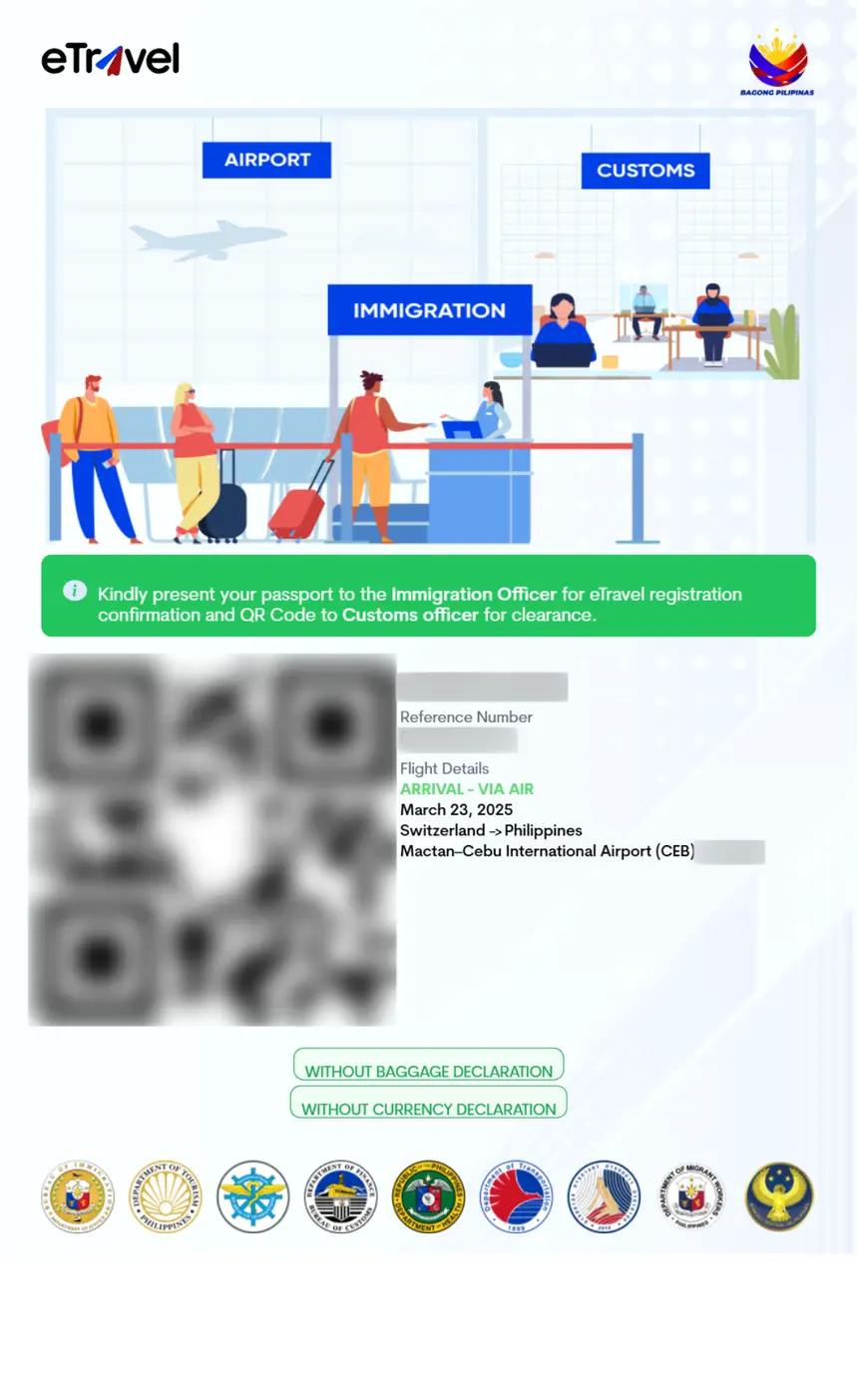
The eTravel registration is a mandatory digital travel declaration required for all arriving and departing passengers. It is not a visa. You need both: the student visa for long-term study authorization, and the eTravel pass for immigration clearance at the port of entry.
Which Philippine universities accept international students?
Any CHED-recognized Higher Education Institution (HEI) can accept foreign students. Popular choices include the University of the Philippines, Ateneo de Manila University, De La Salle University, University of Santo Tomas, and numerous medical schools that attract students from India, Nigeria, and other countries.